
 The growing use of plastic piping in construction raises questions about their impact on the health of the people who install them. Because for plumbers, exposure happens nearly every day.
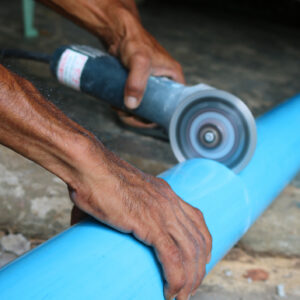 Cutting, sanding, and fitting plastic pipe generates airborne particles—often small enough to be inhaled deep into the lungs. Research shows that inhaled microplastics and plastic dust can behave similarly to asbestos and other fine particulate matter, reaching the bronchioles and alveoli and contributing to respiratory disease, cardiovascular effects, and even cancer risk. Occupational studies have linked plastic dust exposure to increased incidence of respiratory illness and lung cancer in exposed workers. But dust is only part of the story.
Many plumbers suffer more intense exposure from the joining process, when they apply solvent cements and primers to PVC, CPVC, and other plastic materials. These products contain volatile organic compounds such as cyclohexanone and tetrahydrofuran, which readily vaporize and can be inhaled during use.
 Construction environments often amplify exposure effects. Plumbers often work with plastic pipes in enclosed or poorly ventilated spaces, increasing airborne concentrations of both dust and chemicals. As part of a CBS investigation into plumbers’ health, one veteran piping instructor described the experience of many new and established tradesmen: “…It’s the glue, it’s the cleaner… You can smell how strong and potent it is. There isn’t one of these chemicals that says it’s safe for you.” Warnings on commonly used products reinforce health concerns, often including phrases such as “do not breathe vapors,” “known lung irritant,” and “suspected of causing cancer.”
Occupational health research supports these concerns. Studies of construction workers in other sectors who get exposed to organic solvents have found consistent associations with neurotoxicity, including symptoms such as dizziness, fatigue, impaired memory, and altered nervous system function. Long-term exposure has also been linked to increased risks of chronic obstructive pulmonary disease and other respiratory conditions.
Liver abnormalities are also common in construction populations. Scientific literature helps explain why. Many solvents used in plastic pipe installation are lipophilic, meaning they can accumulate in fatty tissues, including the brain and liver. Repeated exposure – especially without adequate ventilation or respiratory protection – can lead to systemic effects over time.
 Beyond exposure to solvents and normal plastic dust, emerging research on microplastics adds another layer of concern. Studies show that inhalation and ingestion of microplastics are associated with inflammation, oxidative stress, and organ-level effects across multiple biological systems. While long-term human outcomes are still being studied, the early evidence suggests these particles are not biologically inert.
Taken together, these conditions create a unique exposure profile for plumbers: 1) Ingestion of plastic dust and microplastics during cutting and installation. 2) Inhalation of solvent vapors during pipe joining. 3) Repeated exposure over years in confined environments.
Despite this “triple threat,” there is a notable gap in occupational health research specifically focused on plumbers as a population. Most existing studies examine plastic manufacturing workers or adjacent construction trades, even though plumbers experience a combination of exposures that may be distinct in intensity and duration. This lack of knowledge presents both a challenge and an opportunity.
 From a health and safety standpoint, the health impacts of working with plastic pipes and other plastic building materials highlight the need for greater awareness of exposure risks, improved personal protective equipment, and better ventilation practices. From a research perspective, they show we need targeted studies to evaluate long-term health outcomes in plumbing professionals.
Last, from a design perspective, the health impacts of plastic-based products raise a broader question for the construction industry: Do building teams think hard enough about which materials they choose to use every day? It goes beyond just how products perform and how much they cost. The industry also needs to think about how they impact the safety and health of the building professionals who install them.