
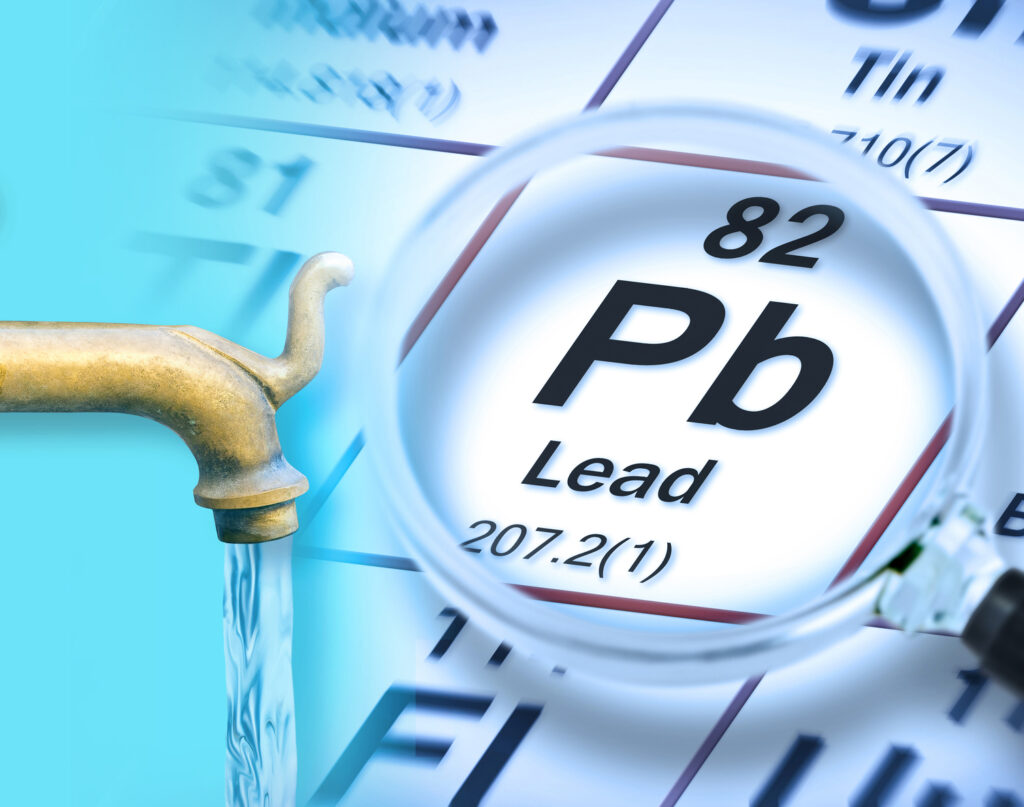
 The history of lead pipes‘ health impacts on communities across the country is well documented, and replacing them remains an urgent priority. From Flint, Michigan, to Washington, DC to Newark, New Jersey, and beyond, dangerously obsolete infrastructure and failures in corrosion control have exposed millions of people to elevated lead levels in drinking water. A potent neurotoxin with no safe level of exposure, lead has well-documented impacts on neurological development and cardiovascular health, particularly for children.
Despite decades of progress, lead pipes remain embedded throughout the built environment. Service lines connecting municipal systems to buildings, as well as legacy plumbing inside structures, continue to present exposure risks. According to the Environmental Defense Fund’s national inventory, an estimated 9-12 million lead service lines remain in use.
States and communities are making significant progress addressing this issue, thanks to local initiatives and recent infrastructure legislation. Newark recently completed an aggressive lead-pipe replacement program, while states including Michigan and Illinois have implemented policies requiring full lead service line removal. These efforts represent meaningful progress, but they also introduce a new challenge: Removing lead addresses a known hazard. It does not ensure safe plumbing.
This is because plumbing systems are dynamic, demanding environments, making material performance in real-world conditions especially important to ensure health, safety, and building performance. Teams working on replacement programs must evaluate their options carefully, because the materials they select to replace lead pipes will have impacts over decades of operation.
 The Impact of Plumbing Environments
Inside buildings, water does not behave as a neutral medium. It interacts continuously with pipe materials, treatment chemicals, temperature conditions, and patterns of use. These factors influence not only water quality, but also the durability, maintenance requirements, and long-term system performance of plumbing-system components.
One of the first principles teams must consider: water chemistry affects material behavior. The chemistry of water supplies differs significantly by source and treatment method. all Variations in pH, alkalinity, disinfectant type, and dissolved minerals affect plastic and metal piping materials in different ways. Effects include leaching of chemicals and other components, oxidation and corrosion, and increased microbial growth inside pipes, particularly in premise plumbing where conditions differ from distribution systems.
Changes in water treatment (such as the switch to chloramine disinfectants that contributed to the Washington, DC lead crisis) can alter the behavior of pipes and affect material compatibility. Such shifts underscore that the performance of pipes is not inherent to the material alone, but depends on the chemistry each of those pipes encounters over time.
 Temperature Influences Chemical Reactions
Temperature is another critical factor impacting plumbing performance, as warmer water can accelerate chemical reactions within plumbing systems. Hot water systems often operate in the range of 120–140°F. According to the ASPE Plumbing Engineering Design Handbook, elevated temperatures can increase corrosion rates in metals. For polymeric materials, higher temperatures reduce the material strength and have “a strong influence on chemical attacks of plastics.” Additionally, temperature fluctuations make pipes expand and contract, adding mechanical stress and further affecting long-term performance. These effects are particularly relevant in recirculating systems and in buildings with variable usage patterns.
Water Aging and Stagnation Amplify Risk
Periods of stagnation — when water sits in pipes instead of flowing normally —significantly influence water quality. According to AWWA guidance, “extended stagnation can result in deterioration of water quality due to chemical and biological processes occurring within plumbing systems” and can lead to:
- Disinfectant decay,
- Increased leaching of chemicals and metals, and
- Changes in microbial populations, among other impacts.
These effects are not limited to unusual conditions. They are increasingly common in modern buildings due to water conservation measures such as low-flow fixtures and reduced water usage from appliances. Guidance from IAPMO warns that reductions in building water demand has increased water age and resulted in lower levels of disinfectants. While these measures are beneficial for sustainability, they increase the amount of time water remains in pipes and can create conditions that amplify chemical interactions. In practice, this means that modern, efficient buildings may experience more pronounced chemical interactions within plumbing systems than older, higher-flow buildings.
Microbial Activity Evolves with System Conditions
 Water aging also affects conditions that encourage growth of microbes inside pipes. As disinfectants decay over time in stagnant water, microbial communities can develop within plumbing systems. Research published by Microbes and Environments and others has shown that microbial growth on pipe interiors can vary by material: “Some pipe materials release biodegradable organic matter, which further promotes the growth of planktonic bacteria and the development of biofilms on pipe surfaces.” Specifically, a study published in Environmental Science & Technology found that “polymeric materials (plastics) release compounds that can support suspended microbial growth and/or biofilm formation.”
In other words, microbial processes can interact with material surfaces, influence corrosion, and contribute to biofilm formation. While microbial considerations are often addressed separately from material selection, they are inherently linked to system conditions and material performance.
Combined Effects and Long-Term Change
Importantly, these factors do not act independently. Water chemistry, temperature, stagnation, and microbial activity interact in complex ways that evolve over time.
A plumbing system installed today will not experience a single, static set of conditions. Instead, it will be exposed to:
- Changing water treatment practices,
- Seasonal and operational temperature variations,
- Variable occupancy and usage patterns,
- Aging of materials over time, and
- Microbial activity.
These combined effects mean that short-term performance and laboratory certifications do not necessarily predict long-term behavior.
 Implications for Material Selection
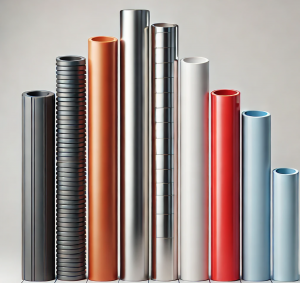
Because of these dynamic conditions, evaluating replacement materials requires a broader perspective. As guidance from Habitable’s Informed material database emphasizes, decisions about plumbing materials to replace lead pipes should consider their impacts on human health, system durability, and environmental impact over the products’ full lifecycles.
This means that specifiers and owners should not select material based on first cost. They should frame their decision as a long-term design choice that influences:
- Building performance and resilience,
- Maintenance and failure risks,
- Health impacts, and
- Environmental impacts.
Regrettable Substitution: Lessons from Polybutylene and Beyond
When architects, engineers, and contractors do not consider interactions of pipe materials with variables in the plumbing environment, history provides a clear warning about the risks of replacing one problem with another: the extensive failures of polybutylene plumbing materials. Polybutylene piping was widely used in residential construction from the 1970s through the 1990s as a lower-cost alternative to metal piping. However, exposure to oxidants such as chlorine in municipal water supplies led to material degradation over time.
As documented in industry literature, polybutylene piping became brittle and prone to sudden failure, often without visible warning. Widespread failures resulted in extensive property damage and one of the largest class-action lawsuits in U.S. history. Industry analysis found that oxidizing disinfectants attacked the polymer structure, leading to microcracking and eventual rupture. The scale of failures led to the near-total abandonment of polybutylene in plumbing applications.
This key lesson is not limited to one material. It is systemic: Materials that perform adequately under initial conditions may degrade under real-world water chemistry over time.
 Regrettable Chemicals
For plastic chemistries in particular, the concept of “regrettable substitution” is well documented. For example, the industry used Bisphenol A (BPA) to improve the strength and durability of plastics until BPA was linked to a range of “adverse health effects, including breast and prostate cancer, obesity, neurobehavioral problems, and reproductive abnormalities,” according to the National Institutes of Health. After research revealed these negative health impacts, plastic producers then replaced BPA with bisphenol S (BPS) and bisphenol F (BPF), only for subsequent research published by French medical researchers and the NIH to find that these substitutes exhibited similarly harmful properties. The NIH report noted that the replacement chemicals may have even greater toxicity than the substances they replaced. This raises a critical question for plumbing material selection:
Are the long-term health and performance aspects of “innovative” replacement materials fully understood?
The answer is almost certainly “No,” according to an assessment in the journal Environmental Science Technology that identified over 350,000 chemicals and mixtures of chemicals registered for production. Only about 23,000 of those have been listed with the Registration, Evaluation, Authorisation, and Restriction of Chemicals (REACH) regulation. That’s less than 7% – meaning potential health effects of the other 93% are largely either unknown or unavailable.
Looking Ahead
Lead service line replacement is essential… but it is only a first step. Making material decisions made without fully accounting for multiple important factors can lead to unintended and unfortunate consequences. Our next report will look in more detail at the ways that the dynamic and evolving plumbing environment affects specific metal and plastic pipe materials and give guidance to architects, engineers, and building owners on how they should specify materials to replace the toxic legacy of lead pipes.