 After wildfires destroyed communities in California, the American Water Works Association published “Smoke and Water Don’t Mix,” an analysis of water contamination by benzene in the wake of the Tubbs Fire and Camp Fire disasters. Written by representatives of the U.S. Environmental Protection Agency and the California State Water Resources Control board, the study looked at causes and lessons learned from remediation.
The summary found that thermal degradation of plastic pipe and other water system components was a primary source of benzene contamination that reached as high as 1,250 ug/L. Back-siphonage of smoke also contributed to this contamination. “Once present in the system at high levels,” said the authors, “the benzene dissolved into the water and was adsorbed and absorbed onto pipes and gaskets.”
The maximum allowable level of benzene in water is 1 ug/L in California; the Federal level is 5 ug/L. Above those levels, benzene is known to impact human health, damaging the immune system by affecting production of white cells, causing anemia by lowering production of red blood cells, and increasing risk of leukemia due to its carcinogenic properties.
In response, the city of Santa Rosa had to maintain a do-not-drink advisory for 11 months in the affected areas. To address the contamination, they performed multiple flushes of the system, but ultimately took the serious step of removing water system components and piping across hundreds of properties in order and replacing them completely to remove contamination sources.
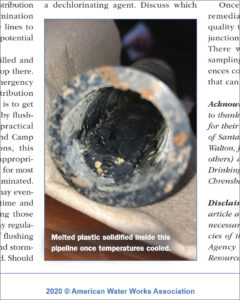
About a year later, the tragic Paradise fire resulted in similar contamination of the public water system. Based on learning from Santa Rosa, investigators were able to quickly identify that “thermal degradation of plastic pipelines and components occurred.” In this case they found high levels of contamination from benzene, polyaromatic hydrocarbons, boron, and methylene chloride, in addition to other compounds.
The authors conclude the article with a series of detailed recommendations outlining the processes and remediation steps that were shown to be effective in both these contamination incidents. They include the following:
- Issue do-not-drink and do-not-use orders
- Test for benzene and other compounds to evaluate contamination
- Perform unidirectional flushing
- Replace contaminated infrastructure that doesn’t remediate through flushing
- Inform the public through outreach as soon as possible
What they didn’t say, but might be a better solution to preventing water system contamination in wildfire-prone areas, is to require use of non-combustible pipe materials for community and building plumbing systems. This step would minimize degradation and destruction of the piping that contaminated pipes with benzene and other chemicals in the first place.