
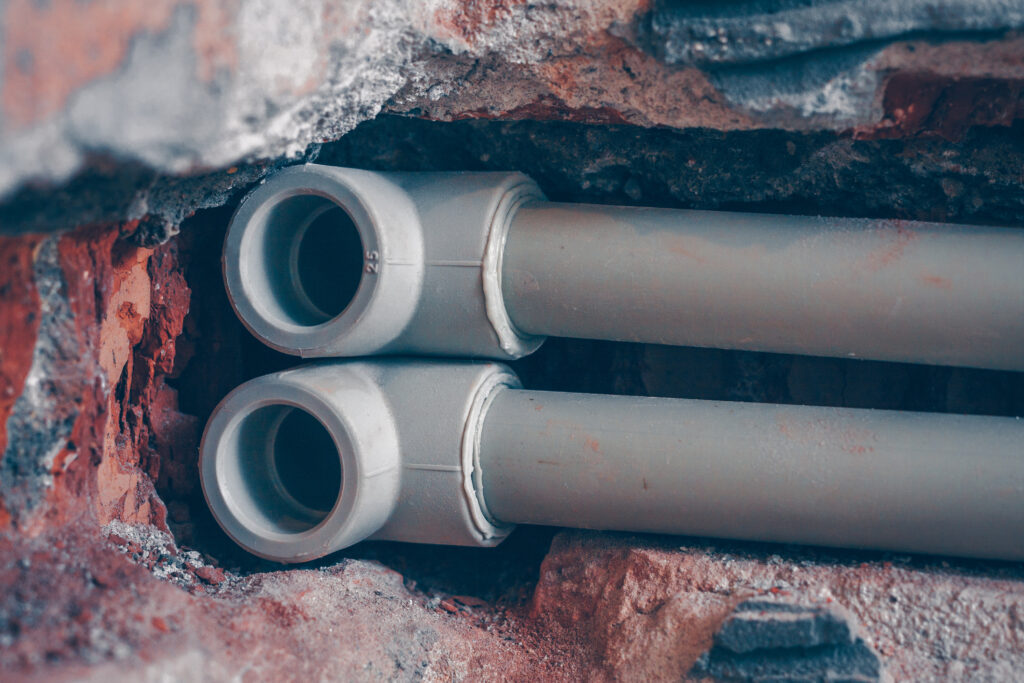
 Polybutylene plastic pipe has largely disappeared from new construction, but its history of failures remains relevant to those who manufacture, specify, install or own plumbing systems. Used extensively in the United States beginning in the late 1970s, polybutylene pipe promised lower cost and ease of installation. Millions of buildings eventually installed it. Years later, leaks and failures led to widespread litigation, including a $950 million settlement.
Research later identified an important failure mechanism: chlorine derivatives could promote degradation of polybutylene, with water pressure accelerating the process. The history offers three lessons that still matter.
- Code compliance is only a starting point. It’s not a guarantee. Polybutylene plastic pipe was accepted for plumbing applications and widely installed. That did not prevent failures or losses. For architects and engineers, the lesson is not to distrust codes, but to recognize their limits. Material selection may also require consideration of water chemistry, temperature, pressure, installation conditions, chemical exposure and expected service life. A product can meet applicable requirements and still perform differently under real-world conditions over decades.
- Liability for failures can extend beyond manufacturers. Polybutylene pipe failures spread financial consequences far beyond the plumbing itself. Owners dealt with leaks, property damage, insurance claims and replacement costs. Builders and contractors were drawn into disputes, and manufacturers eventually faced major litigation. The same process holds today. Investigators examine what failed and ask why the material was selected, how the system was designed, whether pipes were correctly installed and whether relevant risks were reasonably foreseeable.
- Some vulnerabilities reveal themselves only over time. Long-term material degradation can be difficult to predict from initial performance. Polybutylene plastic pipe failures illustrate how material, environmental and mechanical stressors interacted. Current pipes also can perform successfully at installation, but then degrade later. When selecting pipe materials, the right question is: “What conditions could affect plumbing performance and resilience over the intended service life?”
What does this mean for PEX and other plastic piping materials?
While issues with specific types of plastic piping, including PEX, have continued to emerge, the future of these pipe materials will likely follow a different pattern. Each plastic has different chemistry and structure, varying manufacturing methods, and diverse performance limitations. What we can broadly say is that long-term polymer performance often depends on material chemistry, water conditions, mechanical stress and installation details that may not be apparent when a building is commissioned.
A recent dispute involving one of the largest homebuilders in the U.S. illustrates the stakes. According to media sources, the homes contained PEX piping that homeowners allege began to leak in less than five years. The complaint alleges that micro-cracks and holes caused leaks and water damage. The pipe manufacturer claimed that independent experts found no systemic issue with the affected piping, emphasizing that pipe durability can vary with installation and operating conditions. Questions then arose about the builder and their subcontractors, illustrating the fact that when plumbing systems fail, a liability “blame game” can arise among manufacturers, builders, installers and owners.
Implications for Current Material Decisions
Lessons from failures of polybutylene plastic pipes show that compliance with standards and codes should not replace careful consideration of performance under realistic service conditions. Design and construction teams must consider system configuration, water chemistry, installation practices, chemical exposures, and fitting compatibility. This type of complete evaluation can help prevent first-cost savings from becoming long-term liabilities.