Damage and Risks from Failed CPVC Sprinkler Pipes
Fallout from Chemical Sensitivity of Plastic Plumbing Materials
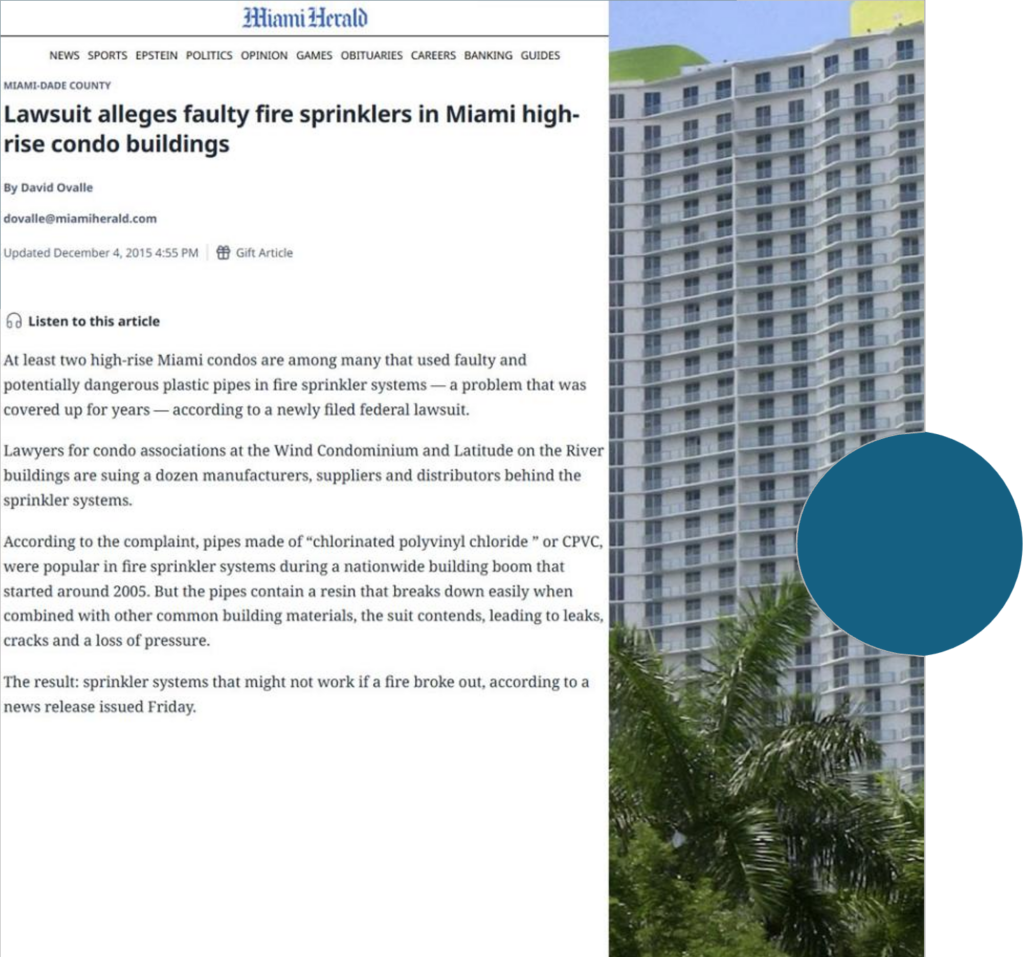
Incompatibility of chlorinated polyvinyl chloride (CPVC) pipe materials with chemicals commonly used in building projects pose a significant risk to building safety. In two Miami buildings, the sensitivity of these plastics led to failures of fire-sprinkler systems. The resulting water leaks caused tens of millions of dollars in damages. Ceilings stained. Mold spread inside walls. And eventually the condominium associations filed a lawsuit against manufacturers and suppliers on behalf of residents.
In the context of fire risk, however, the failures of sprinkler-system pipes go well beyond property damage. See sidebar: “How Sprinkler Pipe Failures Could Compromise Life Safety.”
Fire-sprinklers are among the most effective ways to protect life-safety in the built environment. NFPA research shows they reduce fire deaths by 90% in properties that have them. In the two Miami high-rise buildings (and many, many others with similar CPVC pipes), that life-safety infrastructure was silently failing.
What Failed… and Why
The failure mechanism of the CPVC plastic pipes in these sprinkler systems traces back to chemical incompatibility with corrosion inhibitors that circulated in the pressurized sprinkler system. The interaction between the plastic and the anti-corrosion compound degraded the CPVC pipes from the inside, leading to cracks and failures of fittings at transition joints, the points of highest mechanical stress.
Expert testimony cited in the complaint stated that chemists at the manufacturer knew years before that such interactions would likely produce damage. The company even issued a safety warning but then withdrew it within a day. Internal emails cited by the lawsuit allege they show evidence of a conspiracy and indicate the company continued selling the product despite the risk. That decision likely amplified the scale of this problem across thousands of multifamily projects nationwide.
Implications for Design Professionals
Architects and engineers who specified CPVC materials for fire-sprinkler systems made a reasonable decision by code standards. CPVC plastic pipes met applicable requirements, and manufacturers marketed them as appropriate for the application. What the code did not reveal… and what manufacturers apparently chose not to disclose… was that long-term performance depended on managing risks from chemical sensitivity. CPVC failures typically emerge three to seven years after installation. That’s well after many warranties have expired but long before any reasonable service life should end.
That gap between code compliance and real-world performance is a central lesson of this case. Code approval tells architects and engineers that products passed an industry test. It does not say how those products will behave over decades in the presence of other common building materials, including spray foam, sealants, corrosion inhibitors, lubricants, and pest control compounds.
The Miami case did not produce a verdict widely reported in the public record. What it did produce were learnings that are much more useful:
- A documented pattern of potential failures allegedly suppressed by manufacturers;
- A mechanism of chemical sensitivity and risk that design, construction, and maintenance teams must now evaluate; and
- A list of companies who manufactured and sold materials that cause the issues in Miami.
When fire-sprinkler systems fail, they don’t just cause property damage. They disable a layer of protection that saves lives 90% of the time when it’s needed.
How Sprinkler Pipe Failures Can Compromise Life Safety
Buildings with leaking fire-sprinkler pipes face risks beyond property damage from water. They face the risk that a critical system residents depend on in a fire may not operate. NFPA research finds fire sprinklers reduce civilian fire deaths by 90%, activate in 92% of fires large enough to trigger them, and control the fire in 97% of those cases.
Here are the main problems with systems that have damaged pipes:
- System shut-off: This is the most direct risk. NFPA data is unambiguous: when sprinklers fail to operate in a fire, 61% of the time it’s because the system had been shut off. Building engineers responding to recurring leaks will often shut off sections of a sprinkler system to diagnose problems and make repairs. The failure pattern of CPVC pipes in the Miami buildings almost certainly created conditions where sprinklers were taken offline. How often residents left unprotected during periods of chronic leaks? The public record doesn’t say… but this risk was actual, not hypothetical.
- Chronic pressure loss: Wet sprinkler systems rely on maintaining adequate water pressure. Even when damaged systems are operational, ongoing leaks bleed pressure from the pipes. Systems with multiple failing joints may be incapable of delivering the pressure needed to activate sprinkler heads, even if those heads remain undamaged.
- Damaged infrastructure: NFPA found that in 18% of sprinkler failures, the system had been damaged or lacked maintenance. A fire-sprinkler system experiencing repeated leaks and repairs is by definition damaged and degraded. Even CPVC plastic pipes that appear intact may have been weakened by the same chemical sensitivities affecting the failed joints.
Fire-sprinkler pipes aren’t background infrastructure. They are the backbone of a critical life-safety system.