Red Hill Update: Questions Remain

Recent contamination of water systems by jet fuel leaking from the Navy’s Red Hill fuel storage facility in Hawaii illustrates again the importance of safe drinking water and of the piping that delivers it.
Many questions remain about this incident, including one that has been largely ignored to date: How will the Navy and local officials repair or replace pipes impacted by chemicals released into the system?
The Lie of Plastic Recycling
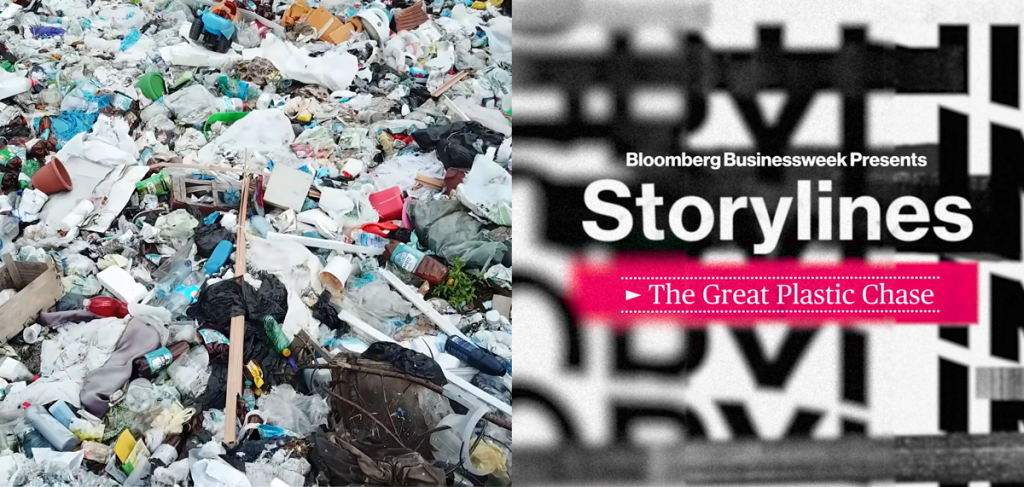
The Lie of Plastic Recycling Bloomberg investigative reporter Kit Chellel put two trackers inside pieces of plastic and deposited them in recycling bins at 3 Tesco locations in the UK. The linked video provides a fascinating look inside a “hidden ecosystem that very few people have oversight of… dirty smelly places to be sorted and […]
Limiting Legionella in Piping Systems
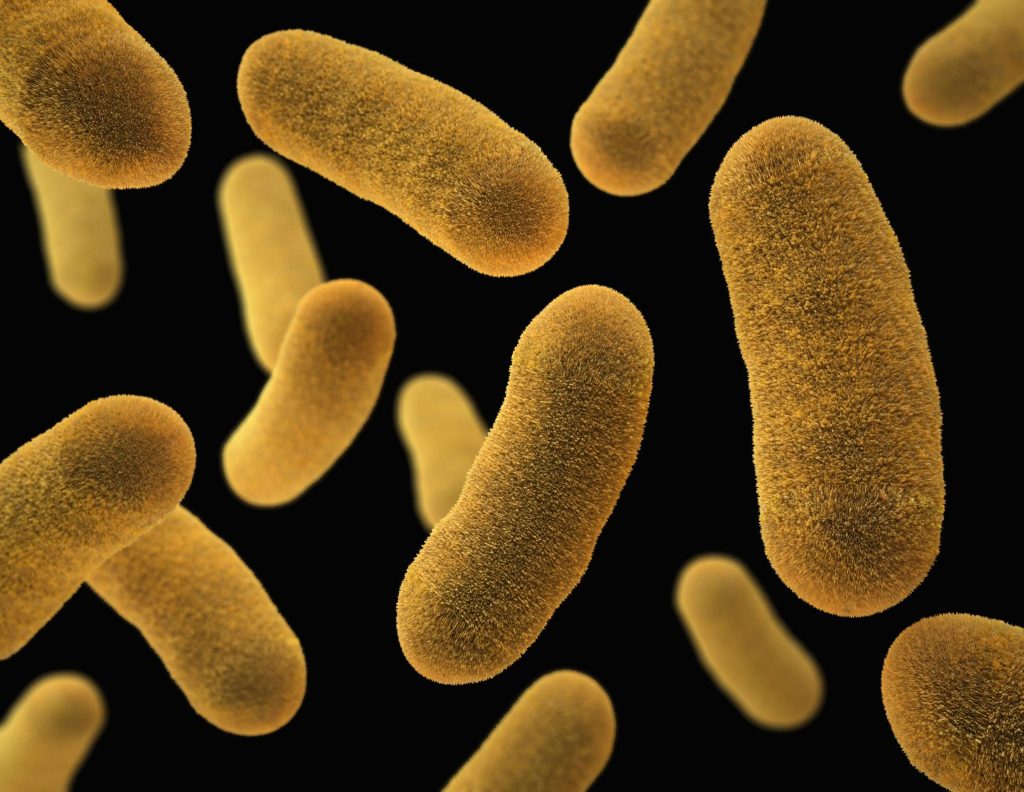
Limiting Legionella in Building Water Systems New Techniques to Gauge & Limit Risk Cases of Legionnaires disease (a form of pneumonia) and Pontiac fever (a flu-like illness) continue to increase, according to CDC research published in March 2022. Piping systems represent a significant source of risk, as Legionella bacteria can grow in the pipes of […]
Plastic Particles Found in Human Blood
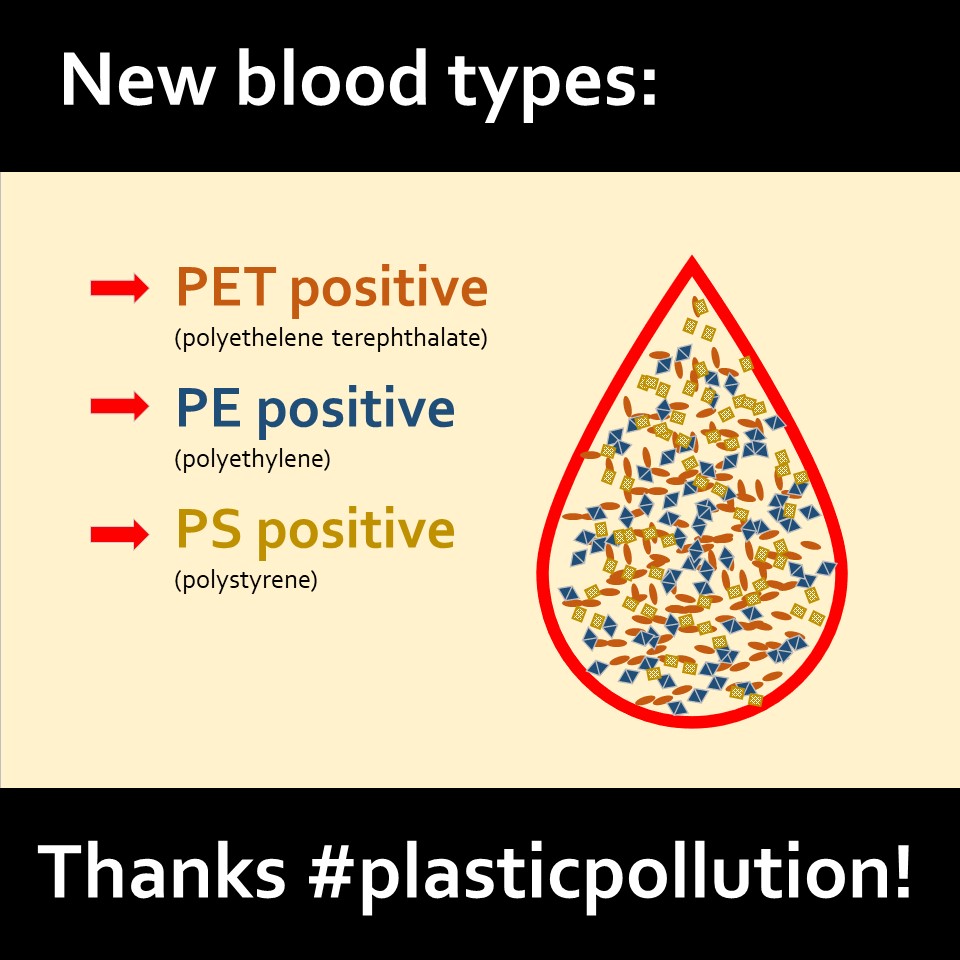
Plastic Particles Found in Human Blood A Dutch team from Vrije Universiteit Amsterdam has published a study showing plastic particles can enter and circulate in human bloodstreams. The researchers found plastics in 77% of those tested, including polyethylene (PE), polyethylene terephthalate (PET), and polystyrene (PS), among others. The paper, “Discovery and quantification of plastic particle […]
Are Plastic Pipes Bad for Water?
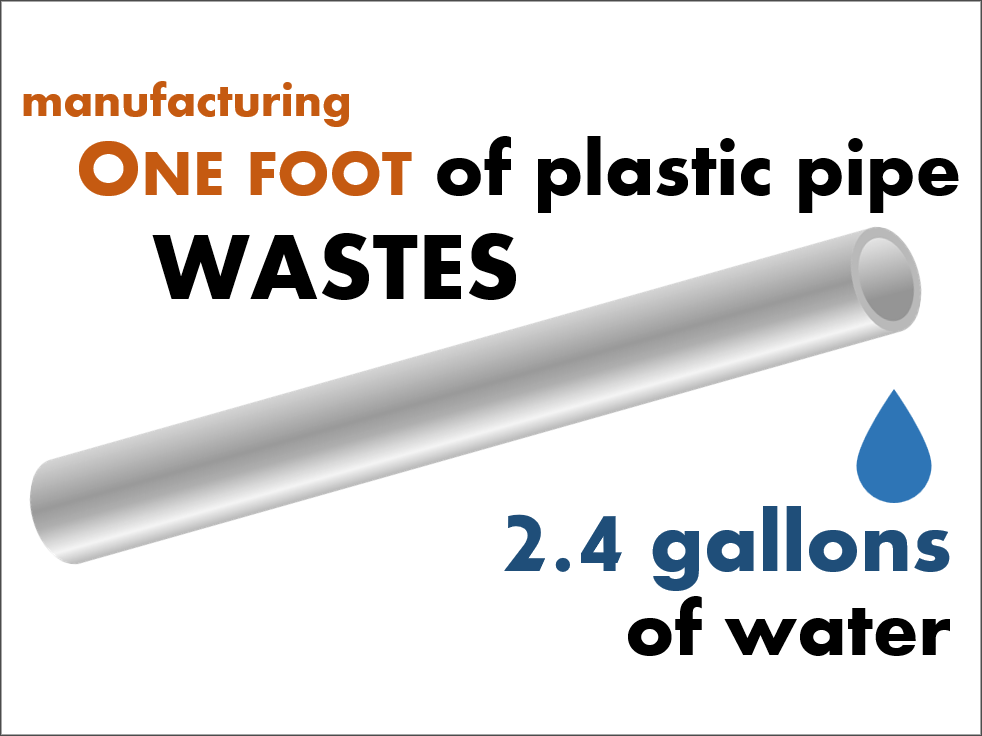
By several measures, the answer is YES.
Red Hill Water Contamination: Piping Issues for Victims
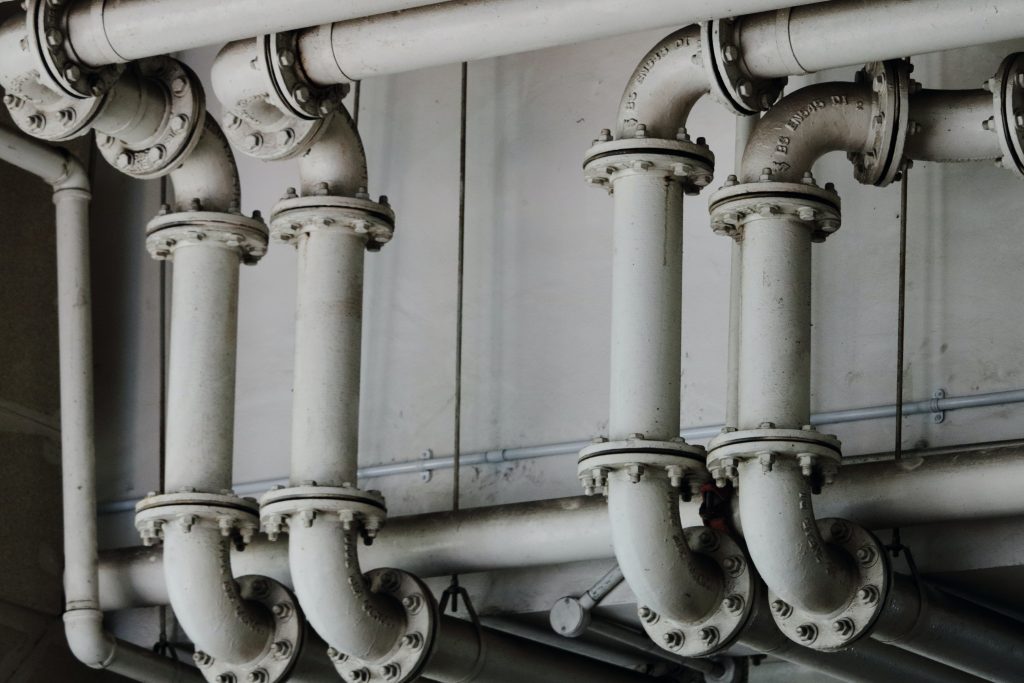
Fuel from the Red Hill Naval facility on Oahu, Hawaii, leaked into a water system servicing over 90,000 residents in November 2021. As the situation evolves, Safe Piping Matters is sharing developments along with recommendations based on research studies and lessons learned from previous contamination events.
Extended Producer Responsibility: A Problem for Plastics

Companies cannot continue ignoring the full impacts of the goods they produce, including depletion of unrenewable materials and pollution of the environment. Extended producer responsibility (EPR) considers these previously untracked financial and environmental costs and seeks to establish systems that will pay for them. Plastic has emerged as a prime focus of EPR initiatives. Here’s why…
Essentials for Successful Lead Service Line Replacement

National Groups Publish Guidelines for Replacing Lead Pipes Toxic lead materials in plumbing systems are an unfortunate legacy from decades of lead pipe installation in homes and communities across the country. They continue to affect the safety of drinking water, with crises in cities like Flint, Michigan, and Newark, New Jersey, providing examples of the […]
Using Proven Materials for Water Systems Part 1: Health & Toxicity
Using Proven Materials for Water Systems Part 1: Health & Toxicity Flint, Michigan may be the first city that comes to mind when you think of the crises that can occur in cities where lead service lines are still prevalent in their water systems. However, Flint is hardly alone in this category. Other cities, such […]
Building Evolution – A Look at Materials, Part 2: Issues and Alternatives
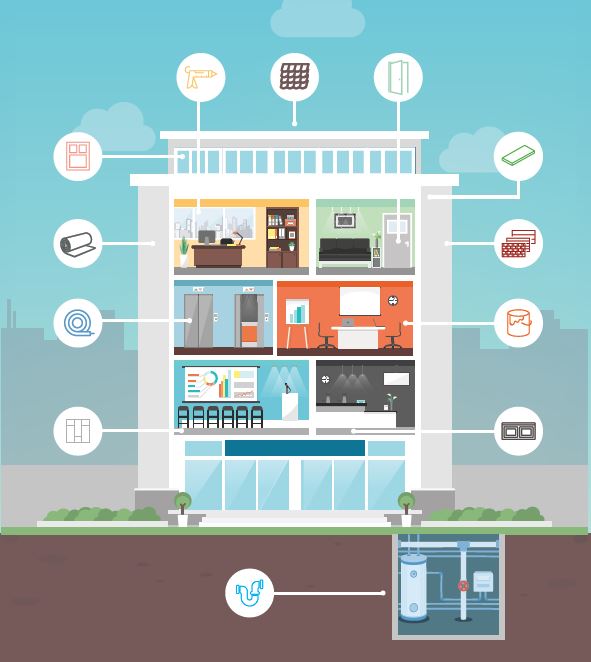
Building Evolution – A Look at Materials, Part 2: Issues and Alternatives In our previous post, we discussed the risks associated with increased use of plastics for construction and interior furnishings. The adjacent diagram shows where plastic materials commonly appear in low-rise and multi-story commercial and multi-unit residential structures. (Click the image to view at full […]